
Lasting freedom from the
daily treatment burden
Scaling sustained-release innovation across therapeutic indications
SpyGlass is advancing a growing portfolio of sustained drug delivery systems designed to provide long-acting therapy for chronic eye diseases. Our lead program, the BIM-IOL System, integrates glaucoma treatment into standard cataract surgery, while our second program, the BIM-DRS, expands the technology to a broader glaucoma patient population outside of cataract surgery and has the potential for lifelong disease management.1
Current Pipeline1


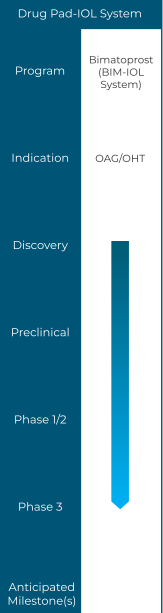
Lead product candidate: BIM-IOL System
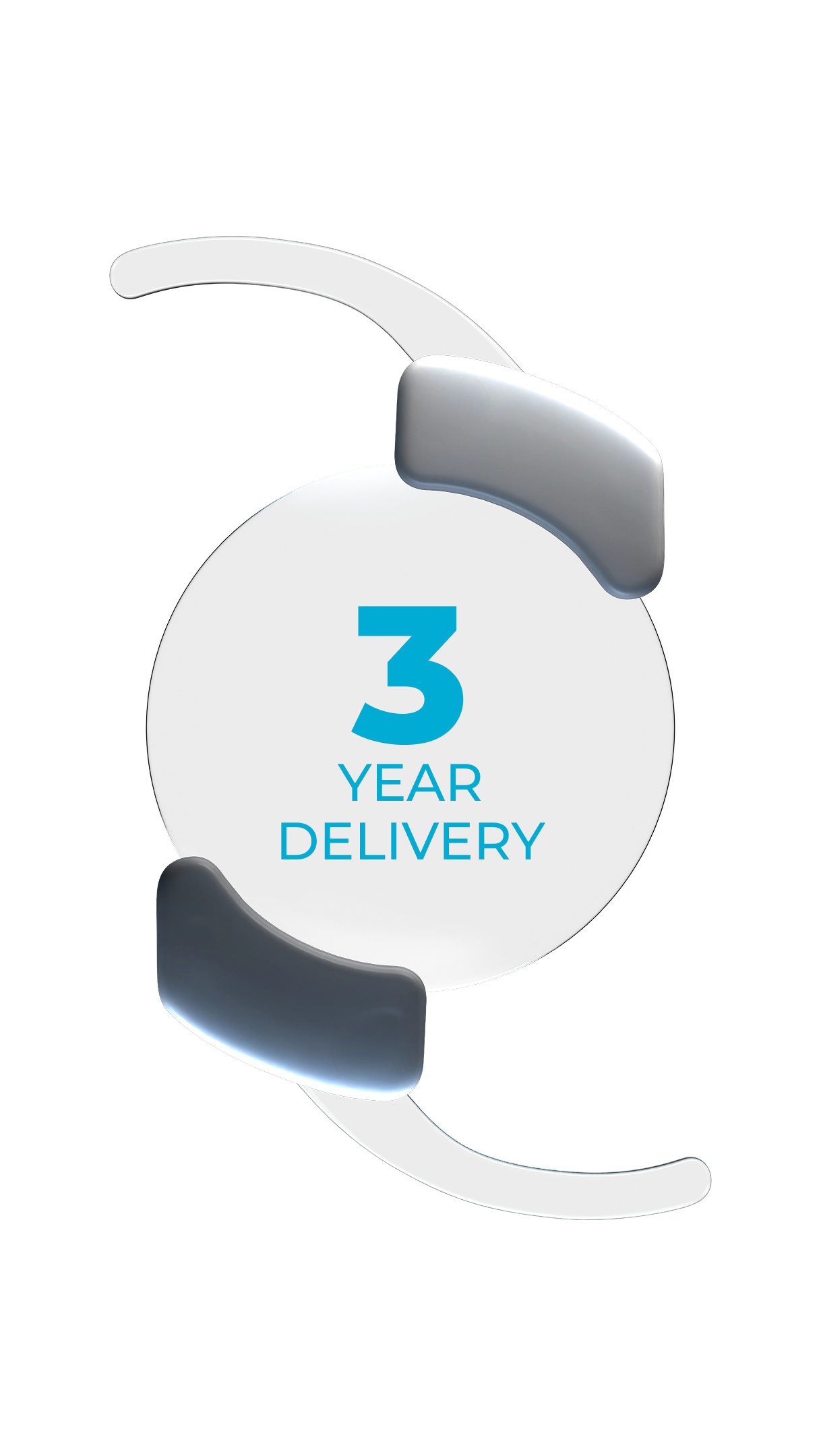
The BIM-IOL System integrates novel, non-bioerodible drug pads with a monofocal intraocular lens implanted during routine cataract surgery.1
- Therapy: Sustained delivery of bimatoprost for up to 3 years1
- Indications: Open-angle glaucoma (OAG) and ocular hypertension (OHT)1
- Development Status: Two Phase 3 clinical trials underway1
- Regulatory Pathway: Pursuing streamlined NDA review pathway1
This system is designed to deliver consistent intraocular pressure (IOP) reduction with strong visual performance, while simplifying care and reducing the adherence burden associated with daily topical medications.1

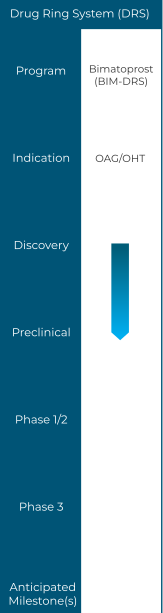
Next-generation sustained-release implant: BIM-DRS (Drug Ring System)
A removable, replaceable implant engineered not only for multi-year drug delivery but also for retreating patients who previously received the BIM-IOL System.1
- Therapy: Delivers at least 3 years of sustained bimatoprost therapy1
- Procedure: Implanted in a standalone procedure; removable and replaceable, enabling lifetime treatment potential1
- Role in care: Significantly expands patient opportunity to pseudophakic glaucoma patients and serves as a re-treatment option for BIM-IOL patients1
- Development status: Animal trials in progress; first-in-human trial planned for 20261

Future disease applications
Current feasibility trials are exploring applications in1:
- Age-related macular degeneration (AMD)
- Chronic uveitis
- Postoperative eye care